

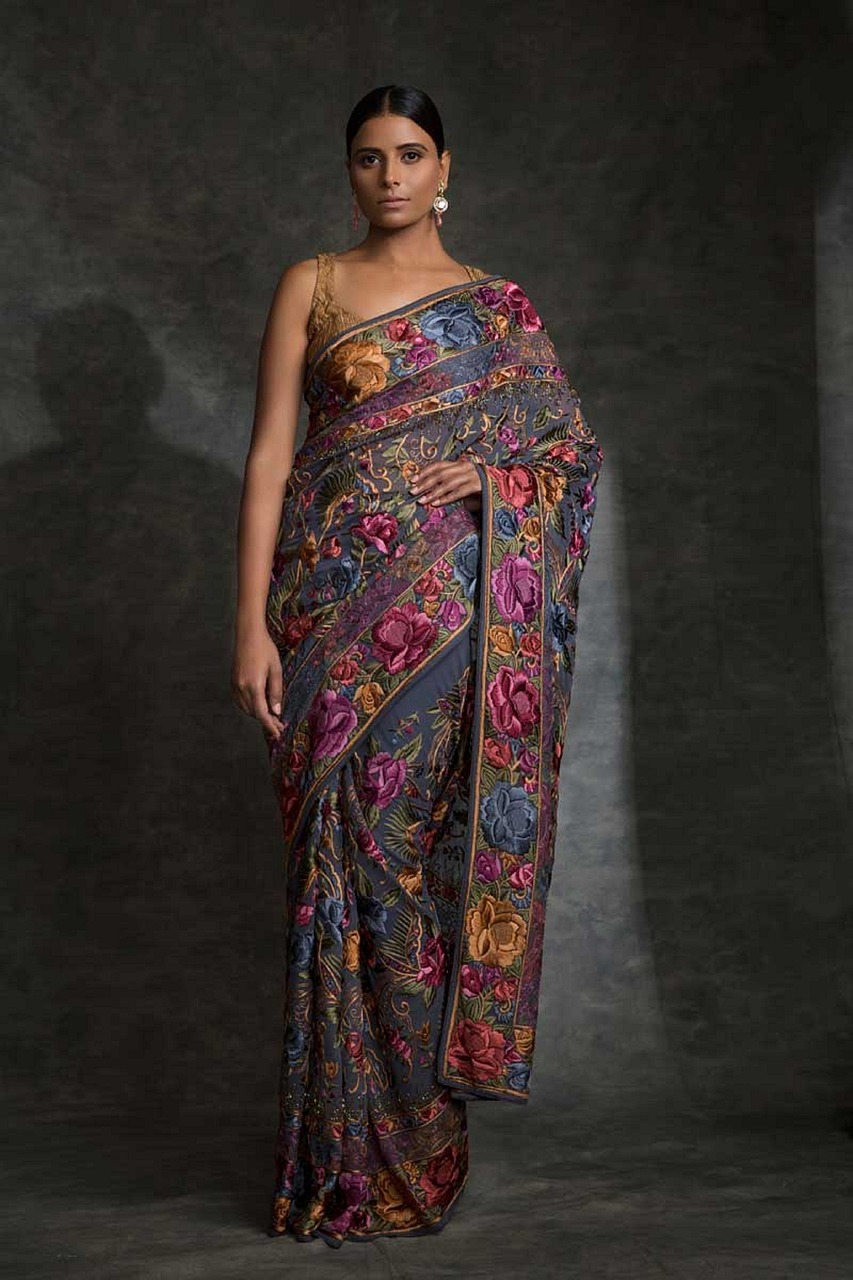
Indian textiles are celebrated around the world for their craftsmanship, colour, and cultural depth, and among these treasures, Meenakari sarees stand out for their breathtaking beauty. Known for their intricate enamel-like designs, vibrant hues, and regal appeal, these sarees blend traditional artistry with modern grace. Today, Meenakari sarees are cherished not only for festive and bridal wear but also as timeless heirlooms passed down through generations.
This blog takes you into the heart of Meenakari artistry, its origins, craftsmanship, cultural significance, and why it continues to captivate saree lovers across the globe.
What Makes Meenakari Sarees So Special?
A Meenakari saree is distinguished by its delicate, colourful patterns inspired by the famous Meenakari jewellery-making technique. The designs often include motifs like florals, paisleys, birds, vines, and Mughal-inspired patterns. The saree surface appears almost enamelled rich in colour, glossy, and intricately detailed.
What makes these sarees exceptionally unique is the combination of weaving and ornamentation, where each motif is carefully filled with coloured threads resembling enamel work.
The Origins of Meenakari Craftsmanship
The art of Meenakari dates back to the Mughal era, originally introduced in jewellery making. Over time, this craft moved beyond precious metalwork and found a place in textiles, especially in Banarasi weaves.
Banaras (Varanasi) became the hub for Meenakari sarees, where skilled artisans integrated the enamel-inspired technique into silk weaving. The resulting saree embodied both the grandeur of Banarasi silk and the brilliance of Meenakari motifs.
Even today, the craft continues to thrive in Varanasi, carried forward by generations of weavers who remain committed to preserving this intricate art.
The Craftsmanship Behind Every Meenakari Saree
Creating a Meenakari saree is labor-intensive and requires impeccable skill. Every piece reflects days, sometimes weeks of dedicated craftsmanship. The process includes:
1. Designing the Motifs
Artisans first draw the motifs on paper. These designs often take inspiration from nature and Mughal art.
2. Preparing the Loom
The selected silk is mounted on the loom, and the design blueprint is transferred to punching cards used for weaving.
3. Weaving with Supplementary Weft Technique
Meenakari motifs are woven using additional threads to add colour and dimension. This is what gives the design its enamelled appearance.
4. Finishing Touches
Once the saree is woven, it undergoes polishing and quality checks before being prepared for the market.
Every detail from thread selection to motif placement carries the imprint of a weaver’s dedication.
Symbolism in Meenakari Sarees
Meenakari motifs are not merely decorative; they are rooted in deeper symbolism:
- Floral Patterns represent prosperity and beauty
- Paisley Motifs symbolize fertility and eternity
- Bird Designs reflect love and freedom
- Vines and Leaves denote growth and continuity
These symbolic elements give Meenakari sarees an emotional resonance, making them significant for weddings, festivals, and cultural ceremonies.
Why Meenakari Sarees Are Loved by Brides
Brides across India, especially in North India, choose Meenakari sarees for several compelling reasons:
1. Regal Aesthetics
The enamel-like finish gives the saree a royal glow, perfect for weddings and grand occasions.
2. Rich Colour Palette
Whether you prefer deep maroons, emerald greens, pastel shades, or classic gold combinations, Meenakari sarees come in endless colour choices.
3. Cultural Legacy
Wearing a Meenakari saree is like embracing a piece of history, something families proudly preserve for generations.
4. Comfortable Luxury
Despite their ornate look, these sarees are lightweight and easy to drape compared to heavily embroidered bridal wear.
Modern Interpretations of Meenakari Sarees
While traditional Meenakari sarees remain popular, designers have introduced contemporary twists:
1. Pastel Meenakari Sarees
Perfect for daytime weddings and modern brides.
2. Organza and Georgette Variants
Light, flowy, and trendy, ideal for younger audiences.
3. Fusion Motifs
Mixing floral Meenakari with geometric or abstract patterns brings fresh appeal.
4. Minimalistic Meenakari Designs
Good for office events, festivals, and semi-formal gatherings.
These modern versions maintain the soul of Meenakari while making it relevant for today’s fashion lovers.
How to Style a Meenakari Saree
Styling Meenakari sarees can be both fun and elegant. Here are some ideas:
1. Pair with Traditional Jewellery
Kundan, Meenakari jewellery, and gold ornaments complement the motifs beautifully.
2. Opt for a Contrast Blouse
Deep tones, sequins, or silk blouses enhance the look.
3. Elegant Hairstyles
Braids, buns with flowers, or soft curls add a graceful touch.
4. Minimal Makeup
Let the saree be the star, opt for soft glam or classic bridal looks.
5. Carry a Potli or Clutch
Choose colours that match or contrast the saree.
Caring for Your Meenakari Saree
To maintain the beauty of your saree, follow these simple care tips:
- Dry-clean only to protect the delicate threads.
- Store in a muslin cloth to prevent moisture damage.
- Avoid hanging for long periods as it may stretch the silk.
- Keep away from direct sunlight to preserve colours.
With proper care, your Meenakari saree can last for decades.
Why Meenakari Sarees Will Always Remain Timeless
Meenakari sarees perfectly blend heritage, craftsmanship, and timeless beauty. Their intricate motifs tell stories of culture and artistry, while the luxurious silk drapes effortlessly on the modern woman. Whether worn by a bride, a collector of fine sarees, or someone who appreciates Indian textiles, Meenakari sarees continue to enchant across generations.
In a world of changing trends, Meenakari sarees stand as a testament to India’s artistic brilliance, a true wearable masterpiece that celebrates both tradition and modern style.