

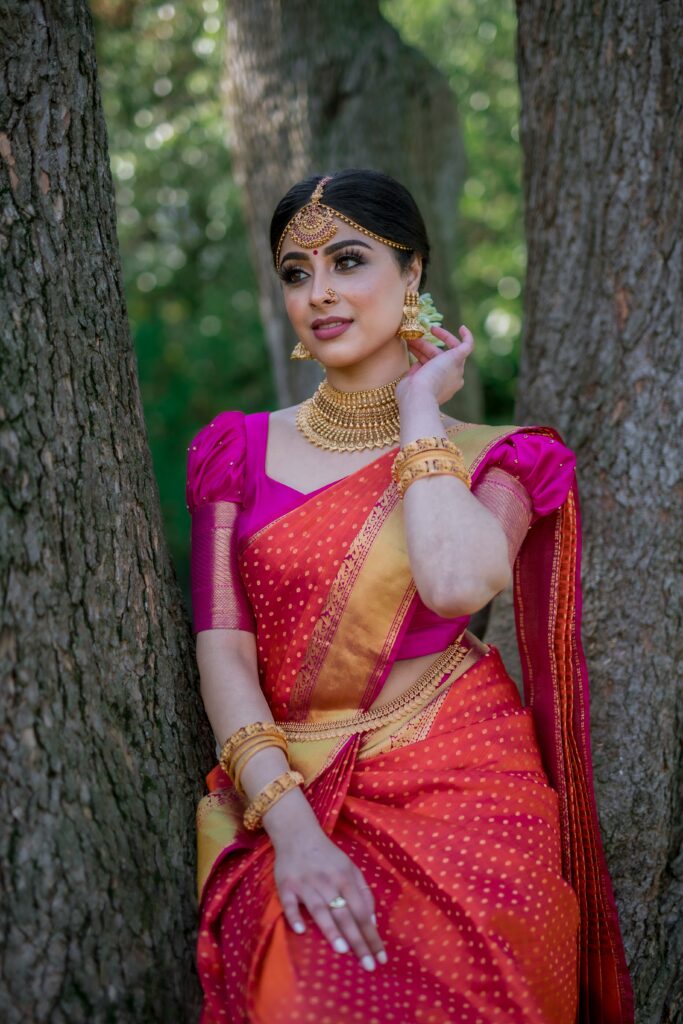
A Kanchipuram saree is one of the most graceful choices for temple functions and traditional family events. Its rich silk texture, meaningful motifs, zari borders, and classic colour combinations make it suitable for poojas, festivals, weddings, engagement ceremonies, housewarming functions, naming ceremonies, and religious gatherings.
When choosing a saree for a temple occasion, the focus is usually different from choosing one for a reception or party. The saree should feel traditional, elegant, comfortable, and respectful for the setting. Bright colours, temple borders, subtle zari, and classic blouse styles often work beautifully.
A good Kanchipuram saree does not need to be extremely heavy to look special. The right colour, border, pallu, and drape can make even a simple saree look rich and appropriate for a sacred occasion.
Choose Colours That Suit the Occasion
Colour plays an important role in temple wear. For traditional events, colours such as red, maroon, green, mustard, turmeric yellow, royal blue, purple, cream, and orange are popular choices. These shades carry a festive and cultural feel, making them ideal for poojas and family ceremonies.
For morning temple functions, lighter and brighter colours can look beautiful. Shades like yellow, peach, cream, light green, soft pink, and sky blue feel fresh and graceful. For evening functions, deeper shades such as maroon, bottle green, navy blue, magenta, and violet can create a richer appearance.
If the event is very traditional, a contrast-border saree can be a strong choice. A green saree with a red border, a mustard saree with a maroon border, or a blue saree with a pink border can give a classic South Indian look.
Look for Traditional Motifs
Motifs add meaning and beauty to Kanchipuram sarees. For temple functions, traditional designs often feel more suitable than very modern patterns. Look for motifs such as temple borders, peacocks, mango designs, rudraksha patterns, checks, floral vines, annam designs, and small buttas.
A temple border is especially fitting for religious and cultural occasions. It gives the saree a heritage-inspired look without needing too much extra styling. Peacock and mango motifs are also popular because they blend well with festive jewellery and traditional blouse designs.
If you prefer a simple look, choose a saree with small motifs across the body and a detailed border. This keeps the saree elegant without making it feel too heavy.
Decide Between Heavy Silk and Soft Silk
For long temple functions, comfort matters. Some Kanchipuram silk sarees are heavy because of rich zari work and thick silk. These are beautiful for weddings and grand ceremonies, but they may feel difficult to manage for long hours.
Soft silk sarees are a good option for people who want a traditional look with easier draping. They are lighter, more comfortable, and suitable for poojas, festivals, and family gatherings where you may need to move around.
If the event is highly formal, a pure silk Kanchipuram saree with a grand border may be ideal. If the event is simple or lasts several hours, a lighter soft silk saree can be more practical.
Pay Attention to the Border
The border is one of the most important parts of a Kanchipuram saree. For temple functions, borders with traditional zari work can make the saree look complete and festive.
A medium-width border is often a good choice because it gives a rich look without feeling too heavy. Wide borders can look grand for weddings and major ceremonies. Narrow borders are better for simple poojas or smaller gatherings.
If you want a very traditional look, choose a saree with a Korvai-style contrast border or temple-inspired border. These designs pair well with gold jewellery and classic blouse styles.
Choose a Pallu That Matches the Event
The pallu is another key part of the saree. For temple events, a detailed pallu can make the saree look more ceremonial. Zari lines, traditional motifs, checks, floral work, and contrast colours can all add beauty.
If you are attending a small pooja, a simple pallu may be enough. For a wedding ceremony, festival gathering, or family function, a richer pallu can give a more complete look.
When shopping online, check product images of the pallu carefully. The body, border, and pallu should look balanced together.
Match the Blouse Style Carefully
The blouse can change the entire appearance of the saree. For temple functions, classic blouse styles are usually the safest and most elegant choice. A simple round neck, boat neck, elbow-sleeve blouse, or traditional back design can work beautifully.
A blouse that matches the border colour often gives a complete traditional appearance. For example, a green saree with a red border can be paired with a red blouse. A blue saree with a pink border can look lovely with a pink blouse.
Avoid blouse designs that feel too party-focused for temple occasions. Heavy cutwork, deep backs, or overly modern styles may not suit every religious setting. A neat, well-fitted blouse with traditional details is usually enough.
Select Jewellery That Complements the Saree
Kanchipuram sarees pair naturally with gold jewellery. For temple functions, traditional jewellery such as jhumkas, bangles, chokers, long harams, coin necklaces, temple jewellery, and simple studs can work well.
If the saree has heavy zari, keep the jewellery balanced. If the saree is simple, you can use jewellery to make the look more festive. Fresh flowers in the hair, especially jasmine, can add a beautiful finishing touch.
The goal is to create a graceful look, not an overloaded one. Let the saree remain the main focus.
Think About Weather and Function Duration
Temple events can sometimes involve walking, standing, sitting on the floor, or spending long hours outside. So, comfort is important.
If the function is during summer or daytime, choose a lighter saree that is easier to carry. If the event is indoors or during cooler weather, a heavier silk saree may feel comfortable enough.
Also consider whether you will be helping with arrangements, carrying children, or moving between places. In such cases, a manageable soft silk or medium-weight Kanchipuram saree may be better than a very heavy bridal-style saree.
Final Thoughts
Choosing a Kanchipuram saree for temple functions and traditional events is about balancing beauty, comfort, and cultural elegance. The right saree should suit the occasion, feel comfortable to wear, and reflect the traditional charm of South Indian dressing.
Look for graceful colours, meaningful motifs, suitable borders, a balanced pallu, and a blouse style that respects the occasion. Whether you choose a rich pure silk saree or a lighter soft silk option, a thoughtfully selected Kanchipuram saree can make temple functions and family events feel even more special.