

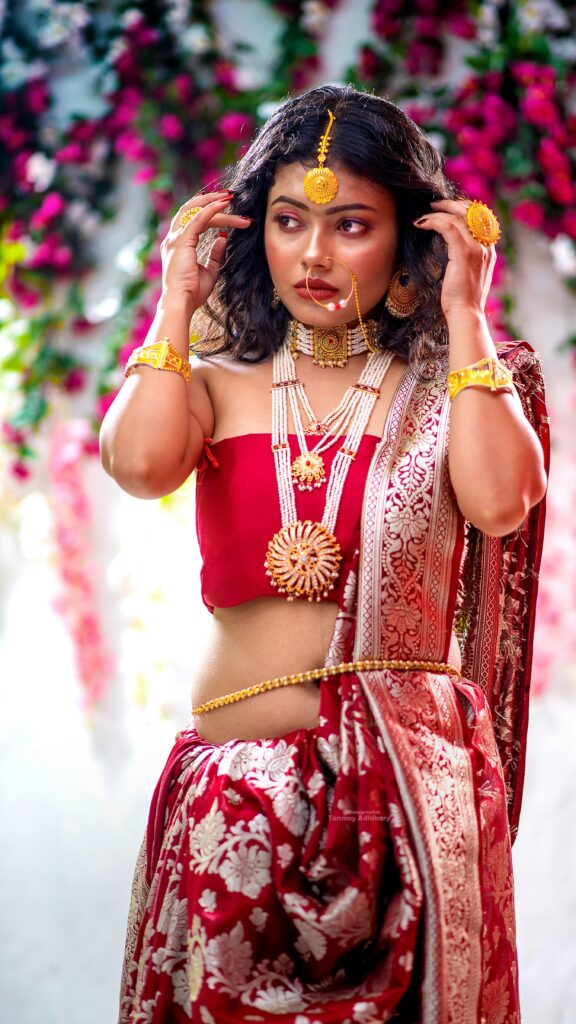
Banarasi silk sarees are among the most treasured textiles in India, known for their luxurious fabric, intricate weaving, and timeless elegance. Originating from Varanasi, these sarees have been a symbol of royalty and tradition for centuries. However, with increasing demand, the market is now flooded with imitations, making it difficult for buyers to distinguish between genuine and fake pieces.
If you’re planning to invest in a Banarasi silk saree, knowing how to identify authenticity is essential. This guide will walk you through the key features, techniques, and tips to ensure you purchase the real deal.
Understanding What Makes Banarasi Silk Unique
Before identifying authenticity, it’s important to understand what sets Banarasi silk sarees apart. These sarees are traditionally handwoven using fine silk threads and often feature intricate designs inspired by Mughal art, such as floral motifs, paisleys, and jaal (net-like patterns). They are also known for their rich zari work, which uses gold or silver threads.
Authentic Banarasi sarees are crafted over weeks or even months, reflecting the skill and dedication of master weavers.
Check for the Silk Mark Certification
One of the easiest ways to verify authenticity is to look for the Silk Mark label. This certification is issued by the Silk Mark Organisation of India and guarantees that the product is made of pure silk.
While not all genuine sarees may carry this label, especially those sold in local markets, its presence is a strong indicator of authenticity. Always ask the seller about certification when purchasing from a store or online platform.
Examine the Fabric Quality
The texture of a Banarasi silk saree is one of its most distinctive features.
What to Look For:
- Softness and Smoothness: Pure silk feels smooth and luxurious to the touch.
- Natural Sheen: Authentic silk has a subtle shine that changes under light.
- Weight: Banarasi sarees are slightly heavier due to dense weaving and zari work.
Fake sarees made from synthetic materials may feel stiff, overly shiny, or too light.
Look at the Zari Work
Zari is a defining element of Banarasi sarees. Traditionally, zari is made from fine gold or silver threads, though modern versions may use tested zari (a mix of metals).
How to Identify Real Zari:
- Turn the saree over and check the reverse side.
- Genuine zari will have loose threads and a slightly rough finish at the back.
- Scratch the zari gently – real zari reveals a reddish or silver base, while fake zari may show plastic or white threads.
Authentic zari work is intricate and detailed, not overly uniform or machine-perfect.
Inspect the Weaving Pattern
Banarasi sarees are known for their complex handwoven designs.
Key Indicators:
- Irregularities: Slight imperfections are a sign of handloom weaving.
- Detailed Motifs: Designs like floral vines, paisleys, and Mughal-inspired patterns should be clearly defined.
- Continuity: Patterns flow seamlessly across the saree without abrupt breaks.
Machine-made sarees often look too perfect and lack the depth of handwoven pieces.
Check the Reverse Side of the Saree
One of the most reliable ways to identify a genuine Banarasi saree is by examining the backside.
Handwoven sarees usually have:
- Floating threads
- Non-uniform finishes
- Visible weaving techniques
In contrast, machine-made sarees have a clean, polished back with no loose threads.
Perform the Burn Test (With Caution)
This is a traditional method but should be used carefully and only if you have a small thread sample.
How It Works:
- Take a few threads from the saree’s edge.
- Burn them carefully.
Results:
- Pure Silk: Smells like burnt hair and leaves ash.
- Synthetic Fabric: Smells like plastic and forms hard residue.
This test is effective but not always practical in a store setting.
Observe the Price
Authentic Banarasi silk sarees are not cheap. The cost reflects the quality of silk, the complexity of the design, and the time taken to weave.
If a saree is priced unusually low but claims to be pure Banarasi silk, it’s likely a fake. While discounts and deals exist, extremely low prices are a red flag.
Know the Different Types of Banarasi Sarees
Understanding the varieties can also help you identify authenticity:
Common Types:
- Katan Silk: Pure silk with a soft texture
- Organza (Kora) Silk: Lightweight with zari work
- Georgette Banarasi: Slightly crinkled texture
- Shattir: Used for contemporary designs
Each type has distinct characteristics, but all authentic versions maintain high-quality weaving and detailing.
Check for GI Tag (Geographical Indication)
Banarasi sarees have a Geographical Indication (GI) tag, which ensures that the product originates from a specific region and meets quality standards.
Sarees with GI tags are more likely to be authentic and support local artisans.
Feel the Craftsmanship
Authentic Banarasi sarees carry a sense of artistry that is hard to replicate. The detailing, texture, and overall finish reflect the expertise of skilled weavers.
When you hold a genuine piece, you’ll notice:
- Richness in design
- Depth in fabric
- A luxurious overall feel
Imitations often lack this finesse.
Common Mistakes to Avoid
- Falling for heavy shine: Synthetic sarees often have an artificial gloss.
- Ignoring the backside: Always check the reverse for weaving clues.
- Skipping certification: Look for Silk Mark or GI tags when possible.
- Relying only on price: Expensive doesn’t always mean authentic, but very cheap is usually fake.
Final Thoughts
Identifying an authentic Banarasi silk saree requires attention to detail, a bit of knowledge, and careful observation. From examining the fabric and zari work to checking certifications and weaving patterns, each step helps you make a confident purchase.
A genuine Banarasi saree is more than just clothing, it’s a piece of heritage, a work of art, and an investment that can be cherished for generations. So, the next time you shop for a Banarasi silk saree, take your time, inspect carefully, and choose wisely. Your perfect saree is worth the effort.